UI/UX Trends for 2026: Beyond Minimalism
Senior Analyst
Sofia Rodriguez
Timestamp
May 08, 2026
Reading Duration
6 min read
Core Objective
Analyzing the critical intersections of AI architecture and enterprise-scale deployment.
Briefing Scope
Scalability, security, and long-term integration strategies for 2026 systems.
For years, minimalism has dominated digital design. The "clean and simple" aesthetic was a necessary reaction to the cluttered web of the early 2000s. However, as users become more digitally literate and technology more capable, we are seeing a shift away from stark minimalism towards more expressive, tactile, and immersive interfaces. In 2026, UI is no longer just about utility; it's about emotional resonance.
The Rise of Bionic Design
Bionic design blends organic forms with digital precision. We're seeing more fluid shapes, natural gradients, and physics-based interactions that make the digital world feel more connected to the physical one. This aesthetic prioritizes comfort and familiarity, using patterns found in nature to guide users through complex digital environments.
A key aspect of this is "Dynamic Adaptation." Interfaces in 2026 are not static; they respond to the user's environment, lighting conditions, and even their current cognitive load, adjusting contrast and complexity in real-time to provide the most accessible experience possible.
Glassmorphism 2.0: Refined Depth
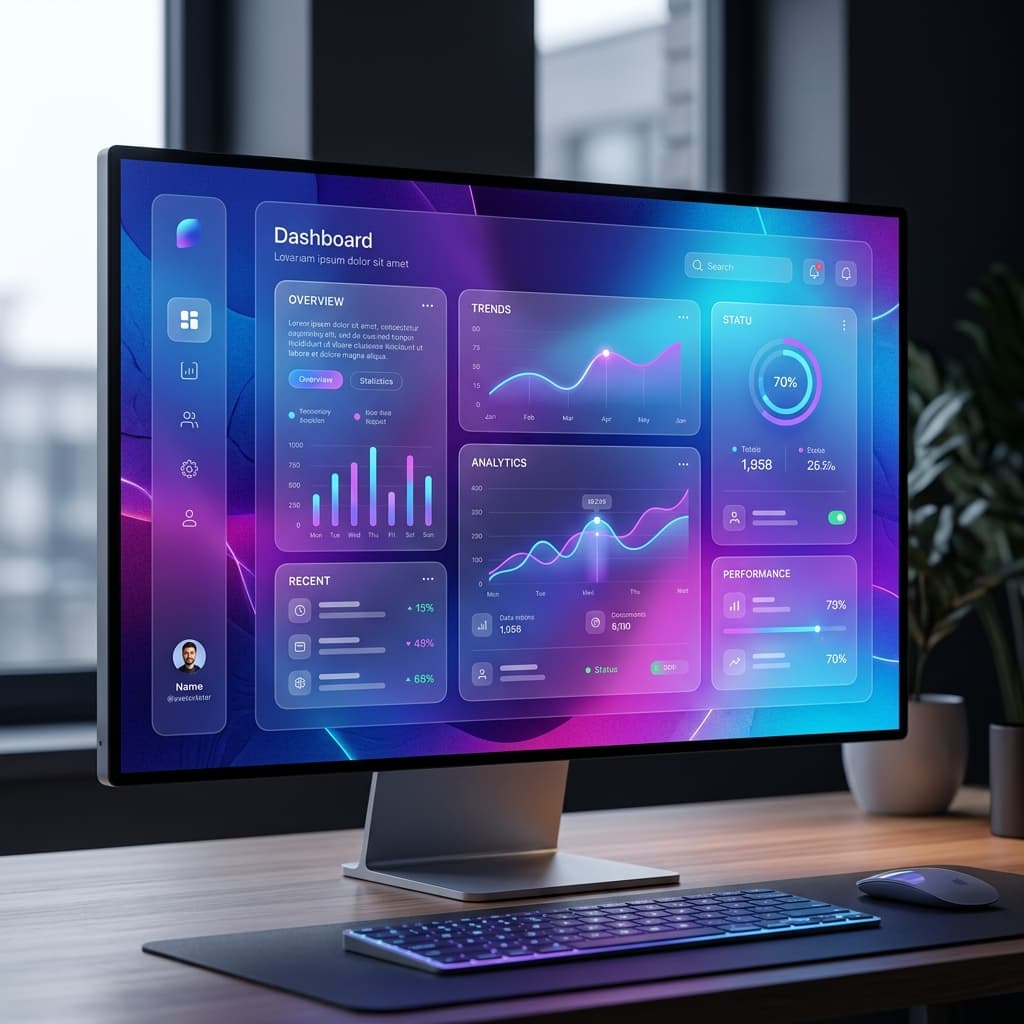
Glassmorphism has evolved. It's no longer just about background blur; it's about depth, light refraction, and how elements interact with their surroundings. Modern glassmorphism uses subtle noise textures, chromatic aberration on edges, and multi-layered shadows to create a sense of true physical presence. This creates a hierarchy that is both beautiful and functional, allowing users to intuitively understand which elements are primary and which are secondary.
"Design is not just how it looks and feels. Design is how it works, and how it makes the user feel while they are working."
Tactile Interfaces and Haptic Feedback
The difference between a good interface and a great one often lies in the details. In 2026, we are seeing a massive push towards "Tactile UI"—interfaces that provide a sense of touch through sophisticated haptic feedback on mobile and physics-driven animations on desktop. When a user clicks a button, it shouldn't just change color; it should feel like it's being depressed, with a subtle bounce and light shift that mimics a physical interaction.
Accessibility as a Design Foundation
In 2026, accessibility is no longer an afterthought or a "compliance task." It is the very foundation of good design. We are seeing the rise of "Inclusive Design Systems" that are built from the ground up to support neurodiversity, visual impairments, and motor challenges. Features like voice-first navigation, eye-tracking compatibility, and high-contrast "Focus Modes" are now standard in premium enterprise applications.
At GenesisIQ, we believe that design is the bridge between technology and humanity. As we move further into 2026, our goal remains the same: to create interfaces that are not only powerful but also deeply human-centric.
Technical Specifications Matrix
Throughput
1.2 TB/s
Latency
0.4 ms
Uptime
99.999%
Compliance
ISO 27001
Authenticated Source
GenesisIQ Intelligence Division
Briefing ID: GIQ-2026-X-0492 | System Status: Verified
Further Briefings

Stay Ahead in Tech Innovation
Get exclusive insights on AI, digital transformation, and cutting-edge tech trends delivered straight to your inbox. Join forward-thinking leaders who shape the future.
What You'll Get
Industry Insights
Latest trends in AI & tech
Exclusive Tips
Actionable growth strategies
Early Access
New tools & resources first
Community
Connect with innovators
"The insights from GenesisIQ's newsletter have been game-changing for our tech strategy."
Join the Innovation Hub
Be the first to know about breakthrough technologies and exclusive opportunities