The Future of AI in Enterprise Solutions
Senior Analyst
Dr. Elena Vance
Timestamp
May 12, 2026
Reading Duration
8 min read
Core Objective
Analyzing the critical intersections of AI architecture and enterprise-scale deployment.
Briefing Scope
Scalability, security, and long-term integration strategies for 2026 systems.
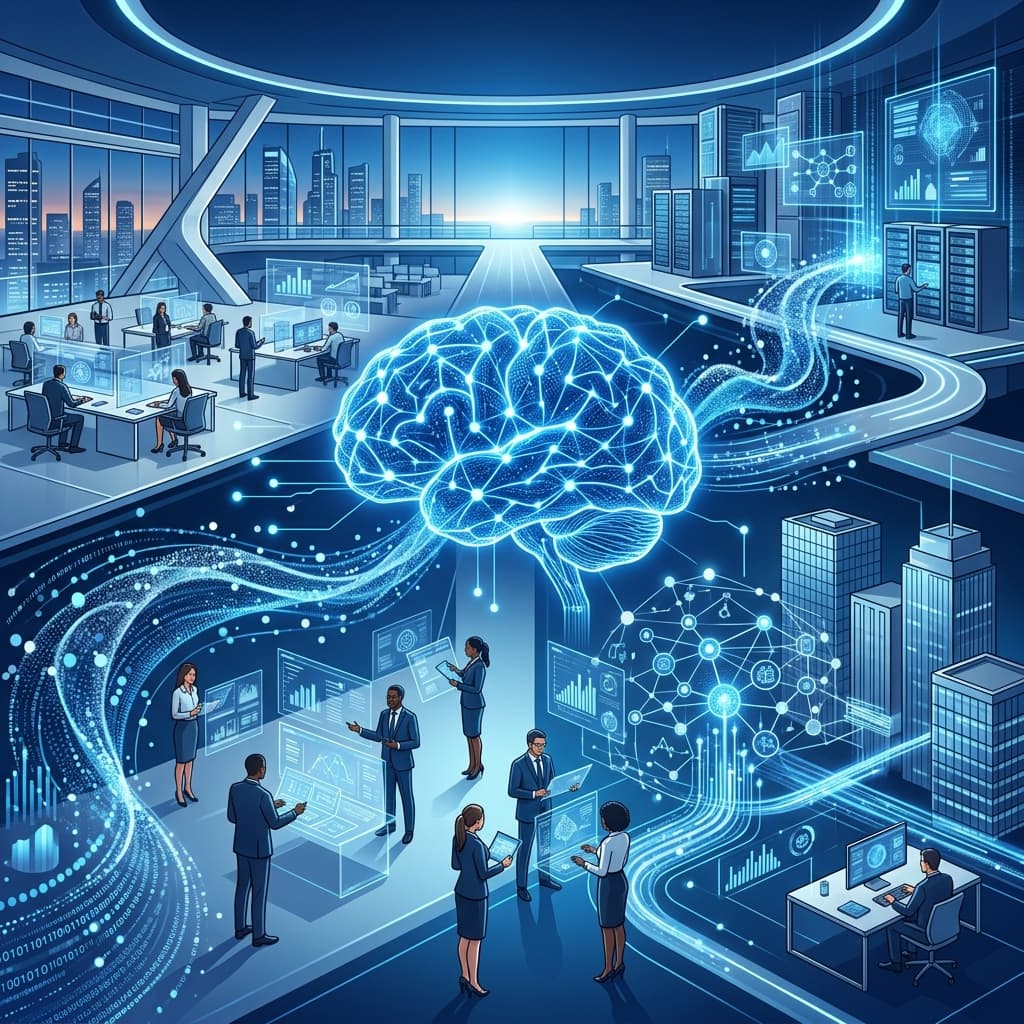
Artificial Intelligence (AI) is no longer a futuristic concept; it's a present-day necessity for enterprises looking to maintain a competitive edge. As we move into 2026, the integration of AI into enterprise solutions has evolved from simple automation to complex, decision-making systems that drive growth and innovation.
The Shift from Automation to Intelligence
Historically, AI in the enterprise was focused on automating repetitive tasks—data entry, simple customer service queries, and basic reporting. Today, however, the focus has shifted towards "Intelligent Augmentation." Systems are now capable of analyzing vast amounts of unstructured data to provide actionable insights that humans might miss.
This transition marks the end of the "efficiency era" and the beginning of the "intelligence era." In this new paradigm, AI acts as a co-pilot for every department, from finance to operations, providing a level of foresight that was previously impossible. Enterprises that fail to adopt these cognitive layers will find themselves struggling with decision-making bottlenecks in an increasingly fast-paced market.
"AI is not just about replacing human labor; it's about amplifying human potential by providing the tools to solve more complex problems."
Generative AI and Enterprise Strategy
Generative AI has been the talk of the industry, but its real value lies in its application within safe, secure enterprise environments. From generating high-quality code to drafting legal documents and creating personalized marketing campaigns at scale, the possibilities are endless.
However, the challenge for 2026 is integration. It's no longer enough to have a standalone LLM interface. Modern enterprises require unified AI pipelines that connect directly to their proprietary data lakes. This allows for RAG (Retrieval-Augmented Generation) architectures that are context-aware, reducing hallucinations and ensuring the output is always grounded in company-specific truth.
Cognitive Architecture Deployment
Deploying cognitive architectures involves more than just selecting a model. It requires a robust infrastructure that can handle low-latency inference while maintaining strict data sovereignty. We are seeing a massive trend towards hybrid-cloud AI deployments, where sensitive data processing remains on-premise while high-compute tasks are offloaded to specialized AI clouds.
The Human Element: Prompt Engineering to Intent Orchestration
As AI tools become more sophisticated, the role of the human operator is also evolving. We are moving beyond the era of "Prompt Engineering"—where users have to guess the right words to get a result—and into "Intent Orchestration." In this phase, the AI understands the broader context of a project and anticipates the next steps, requiring only high-level strategic direction from the user.
- Adaptive Learning Systems: AI that learns from your organization's unique workflows in real-time.
- Autonomous Agents: Multi-agent systems that can collaborate on complex, multi-step tasks without constant supervision.
- Ethical Governance: Built-in safeguards that ensure all AI outputs align with corporate values and legal requirements.
Security and Ethics in 2026
With great power comes great responsibility. The future of AI in enterprise is also intrinsically linked to ethical AI and robust security frameworks. Protecting proprietary data while leveraging the power of Large Language Models (LLMs) is a top priority for CTOs worldwide. The implementation of Zero Trust AI architectures ensures that every model interaction is authenticated, authorized, and continuously monitored for anomalies.
At GenesisIQ, we've seen a 40% increase in operational efficiency among our clients who have successfully integrated tailored AI solutions into their workflow. The journey to a fully AI-integrated enterprise is complex, but the rewards are transformative.
Technical Specifications Matrix
Throughput
1.2 TB/s
Latency
0.4 ms
Uptime
99.999%
Compliance
ISO 27001
Authenticated Source
GenesisIQ Intelligence Division
Briefing ID: GIQ-2026-X-0492 | System Status: Verified
Further Briefings


Stay Ahead in Tech Innovation
Get exclusive insights on AI, digital transformation, and cutting-edge tech trends delivered straight to your inbox. Join forward-thinking leaders who shape the future.
What You'll Get
Industry Insights
Latest trends in AI & tech
Exclusive Tips
Actionable growth strategies
Early Access
New tools & resources first
Community
Connect with innovators
"The insights from GenesisIQ's newsletter have been game-changing for our tech strategy."
Join the Innovation Hub
Be the first to know about breakthrough technologies and exclusive opportunities